
Intro
A rear extension in Crawley is one of the most effective ways to improve how a home functions without moving.
A well-designed rear extension in Crawley can transform kitchens, dining areas and family spaces, making the ground floor feel brighter, more connected and more practical for everyday living. Rear extension projects often form part of wider house extensions in Crawley strategies involving layout transformation and structural coordination.
At Studio Ninety-Three, we approach rear extension projects in Crawley through a structured architect-led process that combines extension design, residential alterations, extension planning and technical coordination from the outset.
Rear extension Crawley homeowners invest in should not only add floor area, but also improve flow, natural light and the overall quality of the home.
Many rear extension projects also form part of wider residential design projects involving layout reconfiguration, structural coordination and long-term home improvement strategies.
Rear extension projects are often used to create larger kitchen-dining spaces with improved circulation, storage and open-plan living arrangements. You can explore our Kitchen Extension Crawley page for more detailed guidance on kitchen-focused extension layouts and residential extension design.
What Is a Rear Extension in Crawley?
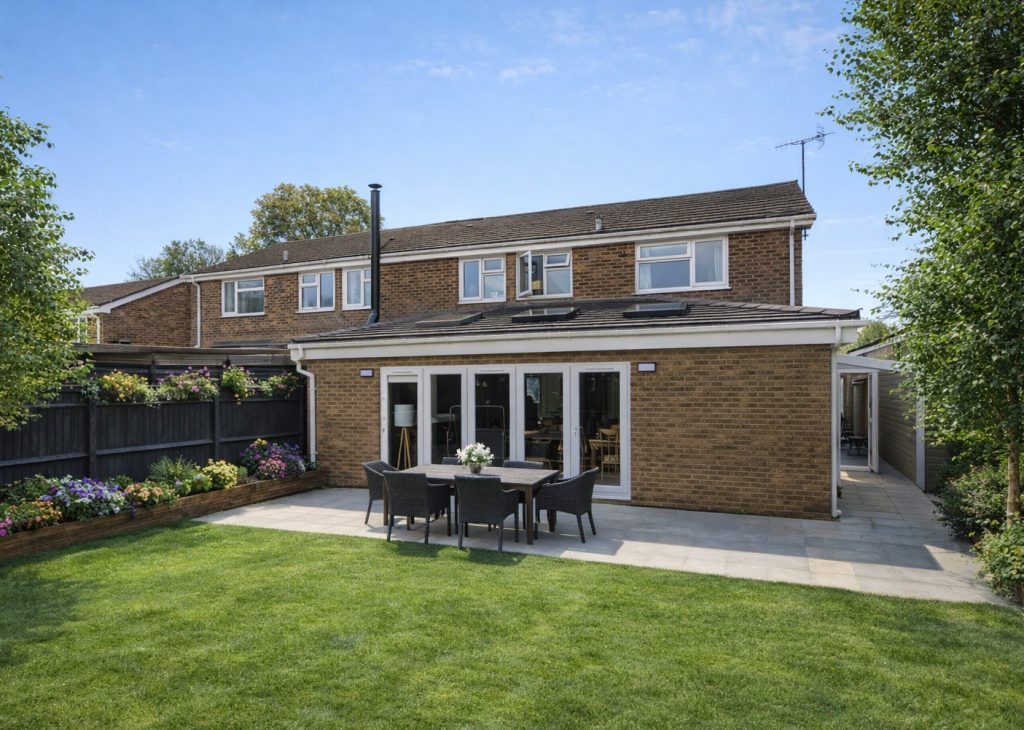
A rear extension in Crawley refers to extending the back of an existing house to create additional internal space. This is often used to enlarge kitchens, dining rooms or open-plan family areas, particularly in semi-detached and detached homes.
Rear extensions can vary in scale from modest single-storey additions to larger schemes that involve significant structural alteration and full internal reconfiguration. The right approach depends on the property, the site and the intended use of the new space.
Rear extensions also form part of wider residential extension projects that may include kitchen reconfiguration, structural alterations and open-plan living improvements.
Why Choose a Rear Extension in Crawley?
Many homeowners choose a rear extension in Crawley because it allows them to improve the existing house rather than move. In many cases, the rear of the property offers the best opportunity to increase usable space while maintaining the established street frontage.
A rear extension can create a larger kitchen, a dedicated dining area or an open-plan layout that supports modern family life. It is often one of the most effective ways to improve both functionality and long-term property value.
Rear Extension Design Considerations
A successful rear extension in Crawley project requires more than simply adding extra square metres. The new extension must connect naturally with the existing house, resolve circulation clearly and bring in as much daylight as possible.
Key design considerations include the depth of the extension, the relationship to the garden, roof form, glazing strategy and how the internal layout will change once the extension is built. These decisions have a major impact on how the finished space feels and functions.
Rear extension schemes are often most successful when considered as part of a wider extension strategy that includes internal layouts, residential alterations and future adaptability rather than as isolated additions.
Planning Permission for a Rear Extension in Crawley
Planning permission requirements for a rear extension in Crawley depend on the size, depth, height and design of the proposed works, as well as the type of property and its planning context. Some rear extensions may fall under permitted development rights, while others require full planning approval.
We assess each rear extension Crawley proposal carefully to determine the most appropriate route, preparing drawings and planning requirements set by the local authority such as Crawley Borough Council.
For broader guidance on residential extension planning requirements, you can also review our Planning Permission Sussex page.
Building Regulations and Structural Coordination
Most rear extension Crawley projects require building regulations approval and clear structural coordination before construction begins. This includes detailed drawings, insulation strategy, drainage layouts and structural design for openings, beams and foundations.
Where rear extensions are combined with internal layout changes, careful technical coordination becomes especially important. Resolving these details early helps avoid delays, uncertainty and costly changes during construction.
Projects involving large openings and open-plan layouts often require coordinated structural alterations and steel design input from an early stage.
Rear Extensions and Open-Plan Living
A rear extension in Crawley is often used to create open-plan kitchen, dining and living spaces. By extending the rear of the house and rethinking the internal arrangement, it becomes possible to form larger, brighter and more flexible spaces that better support modern living.
Many rear extension Crawley projects also involve removing internal walls and coordinating structural openings to improve flow across the ground floor. You can also explore our Open Plan Kitchen Living Crawley page for guidance on structural openings, layout transformation and integrated kitchen-living arrangements.
Cost of a Rear Extension in Crawley
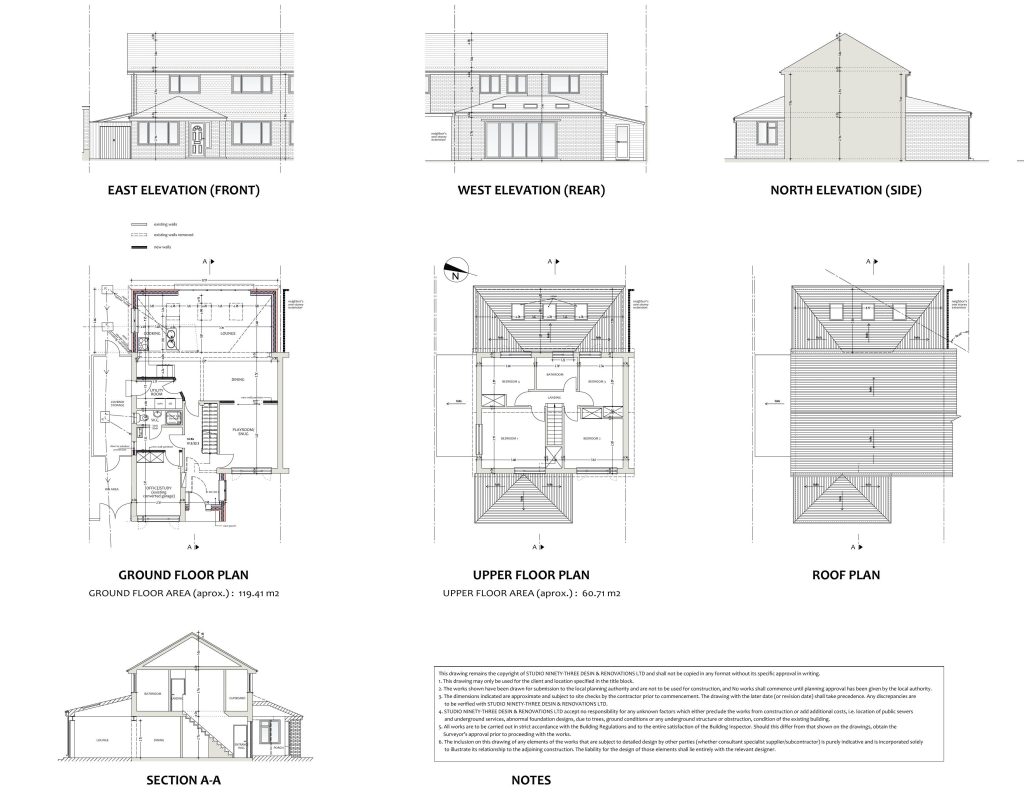
Rear extension costs in Crawley vary depending on the size of the extension, the level of structural work and the overall specification. Simple single-storey rear extensions are typically more straightforward, while larger or more complex projects involving structural alterations, open-plan layouts or high-end finishes require a greater level of coordination and investment.
In many cases, the cost of a rear extension is influenced by factors such as ground conditions, glazing requirements, structural steel design and the level of internal reconfiguration required. Early architectural planning helps clarify these factors and avoid unexpected costs later in the project.
For a more detailed breakdown, you can explore our guide on rear extension cost in Crawley.
Working with an Architect for a Rear Extension
Working with an architect on a rear extension Crawley project helps ensure that design, planning permission, structural coordination and technical information are aligned from the beginning. This reduces risk and leads to a more considered and buildable proposal.
At Studio Ninety-Three, we support rear extension Crawley homeowners through our wider house extensions in Crawley services, from concept design through planning and construction readiness.
You can also explore our Residential Architect Crawley page for broader guidance on architect-led residential design, planning applications and technical coordination.
Local Experience in Crawley
Many properties in Crawley include post-war semi-detached and detached homes where rear extensions are commonly used to improve kitchen layouts, natural light and garden connection.
Our experience with residential extension projects in Crawley helps us assess structural limitations, planning considerations and existing property conditions before detailed design development begins.
Different areas of Crawley can present different site constraints, neighbouring relationships and planning considerations, particularly where extensions involve open-plan reconfiguration or larger rear projections.
We approach rear extension projects as part of a wider architectural strategy that coordinates planning, structural design, layout transformation and long-term usability from the outset.
Frequently Asked Questions
Can I build a rear extension under permitted development in Crawley?
Some rear extensions in Crawley can be built under permitted development rights, depending on the size, height and position of the extension, as well as the type of property. However, many projects still benefit from formal planning approval to ensure the design, layout and long-term value are fully considered.
Working with an architect helps clarify whether permitted development applies and ensures that the extension complies with all relevant planning and building regulations requirements from the outset.
Do I need planning permission for a rear extension in Crawley?
Some rear extensions may fall under permitted development rights, while others require full planning permission depending on extension depth, roof design, property type, neighbouring conditions and local planning constraints. Early architectural assessment helps define the most appropriate planning route before technical design begins.
How much does a rear extension cost in Crawley?
Rear extension costs in Crawley vary depending on the scale of the extension, structural alterations, glazing requirements, internal layout changes and overall specification. Projects involving open-plan kitchen layouts, structural steel design or significant residential alterations typically require greater technical coordination and construction investment.
Can a rear extension create an open-plan kitchen?
Yes. Many rear extension projects are designed to create open-plan kitchen, dining and living layouts with improved natural light, circulation and spatial connection to the garden. These projects often involve structural openings, internal reconfiguration and coordinated architectural and structural design.
Do you provide full architectural services for rear extensions?
Yes. We support projects from early concept design and planning applications through to technical drawings and construction coordination.
Planning a Rear Extension in Crawley?
If you are planning a rear extension in Crawley, early architectural guidance can help define the right design approach, planning route and structural strategy before construction begins.
If you are planning a rear extension in Crawley, speaking with an architect early can help define the right design approach, planning route and structural strategy before construction begins.