
Internal reconfiguration Crawley projects focus on improving how space is used within an existing home by reorganising layouts, removing walls and creating better connections between rooms.
As a residential architect in Crawley, Studio Ninety-Three provides architect-led design, planning and technical coordination for internal layout transformations, ensuring that structural changes and spatial planning are fully resolved before construction begins.
Internal reconfiguration often involves more than simple layout changes. Many projects require structural alterations, including load-bearing wall removal and steel beam installation, making early coordination essential.
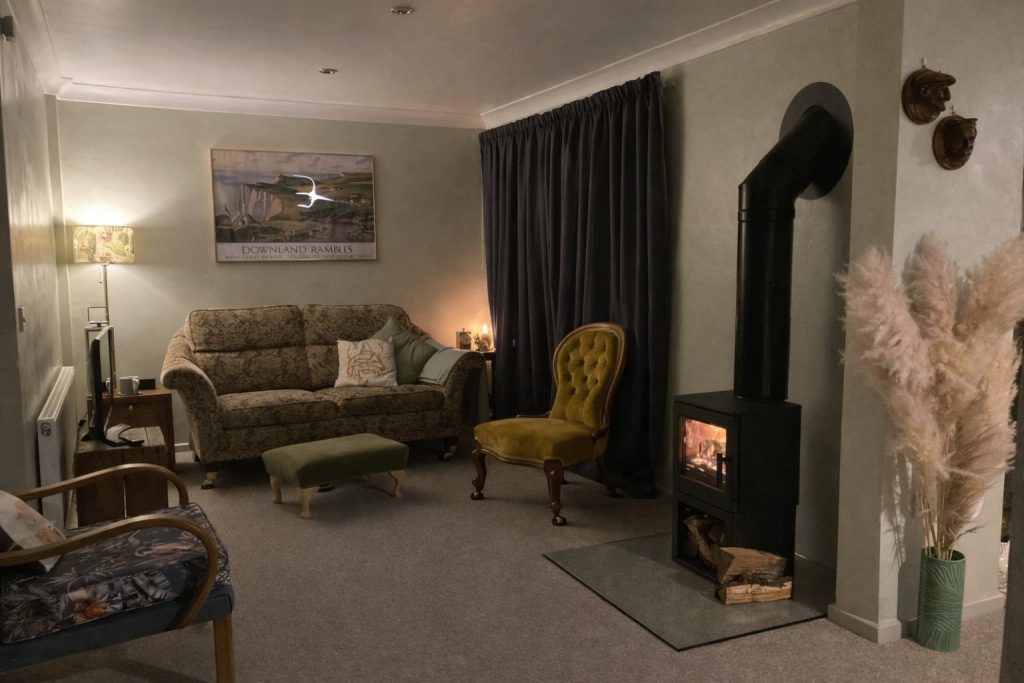
What Is Internal Reconfiguration?
Internal reconfiguration refers to redesigning the internal layout of a property without necessarily extending the building footprint.
This may include removing walls, opening up rooms, redefining circulation and improving how different areas connect and function together.
The aim is to create a more practical, flexible and efficient living environment aligned with modern lifestyles.
Why Internal Reconfiguration Is Common in Crawley Homes
Many properties in Crawley, particularly post-war houses, were designed with separated rooms and limited flow between spaces.
Internal reconfiguration Crawley projects address these limitations by creating more open, connected layouts that improve usability, natural light and overall spatial quality.
Rather than extending, reconfiguring existing space can often achieve significant improvements within the same footprint.
Structural Alterations and Load-Bearing Walls
Internal reconfiguration projects frequently involve structural alterations, especially when removing load-bearing walls or forming new openings.
These changes require careful design and coordination with structural engineers to ensure the building remains safe and compliant with regulations.
An architect-led approach ensures that structural strategy is developed alongside the layout, allowing the project to progress into construction with clarity and reduced risk.
For a more detailed overview of how structural alterations are designed and coordinated, you can explore our structural alterations in Crawley page.
Open-Plan Living and Layout Transformation
Many internal reconfiguration Crawley projects aim to create open-plan kitchen, dining and living spaces.
By removing internal barriers and improving connections between areas, it becomes possible to create a more flexible and sociable environment.
These transformations are often combined with rear extensions, but can also be achieved entirely within the existing structure.
You can also explore our open plan kitchen living Crawley page to see how these types of layout transformations are typically developed.
Building Regulations and Technical Coordination
Even when no extension is involved, internal reconfiguration projects must comply with building regulations.
We prepare detailed technical drawings and coordinate structural design to ensure:
- Load-bearing elements are properly supported
- Steel beams are designed and integrated correctly
- Fire safety and escape routes are considered
- Ventilation and energy performance meet current standards
This ensures the project is fully compliant before work begins on site.
You can also review official guidance on structural alterations and building regulations on the Planning Portal.
Architect-Led Approach to Internal Reconfiguration
Working with an architect ensures that internal reconfiguration projects are carefully planned and coordinated from the outset.
This includes developing layout strategies, coordinating structural input and preparing clear technical information for construction.
By resolving key decisions early, it becomes possible to reduce on-site changes, avoid delays and maintain control of the project.
Internal Reconfiguration vs House Extension
In some cases, internal reconfiguration alone can achieve the desired outcome without the need for a full extension.
However, many Crawley projects combine both approaches, using extensions to increase space and reconfiguration to improve how that space is used.
A clear design strategy helps determine the most effective solution based on the property and project goals.
In cases where additional space is required, you may also want to review our house extensions Crawley page for a broader overview of extension options.
Planning an Internal Reconfiguration Project in Crawley?
If you are considering an internal reconfiguration Crawley project, an initial consultation can help define the layout approach, identify structural requirements and establish a clear design strategy.
This ensures your project is well-coordinated, compliant and ready to progress into construction with confidence.
Benefits of Internal Reconfiguration
Internal reconfiguration Crawley projects offer several advantages beyond simply changing the layout of a home.
Internal reconfiguration Crawley projects benefit from early planning, ensuring better layout flow, structural clarity and long-term usability.
By reorganising existing space, it is often possible to achieve a more efficient and functional layout without the cost and complexity of a full extension. This can be particularly beneficial where planning constraints limit external expansion.
Improved spatial flow allows rooms to connect more naturally, creating a better relationship between kitchen, dining and living areas. This enhances both everyday usability and the overall experience of the home.
Internal reconfiguration can also increase property value by making the layout more aligned with modern living expectations. Homes that feel open, connected and well-planned tend to perform better in the market.
When combined with structural coordination and careful design, these projects provide a cost-effective way to transform how a property works without increasing its footprint.